Anka Çilek Fidesi
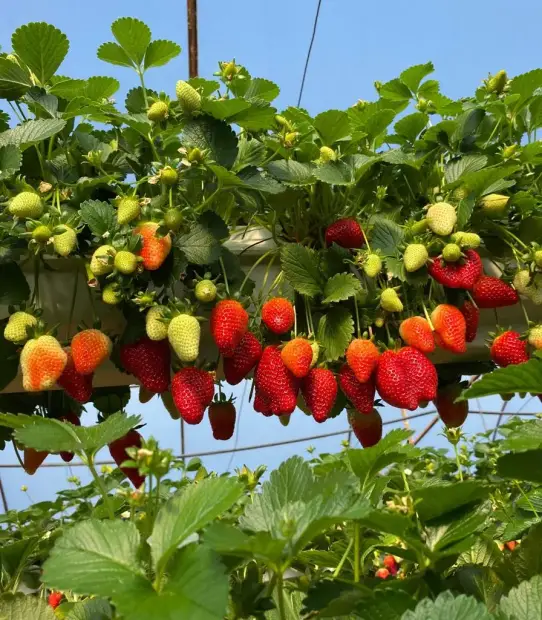
When yield drops or fruit turns out misshapen, growers often look for the problem in the fertiliser, the water or the variety. Yet one of the most important but most overlooked factors determining quality and yield in strawberry is pollination. A uniform, large and full strawberry fruit forms only through the complete and balanced pollination of the flower. At Anka Çilek Fidesi, we know that healthy seedling is also a precondition for good pollination.
How Does a Strawberry Fruit Actually Form?
On the strawberry flower there are numerous female organs, and the swollen, fleshy part of the fruit develops through the fertilisation of these organs. Every region of the fruit needs to be pollinated separately. If part of the flower is not sufficiently pollinated, that region of the fruit does not develop, and the result is deformity, small or angular fruit. In other words, a misshapen strawberry is often not a disease but a sign of incomplete pollination.
The Role of the Bee: A Silent Partner
Although the strawberry can pollinate itself and by wind to a certain degree, the contribution of insects, especially bees, is great for complete and balanced pollination. As bees move over the flower, they distribute pollen regularly and completely. This means larger, more uniform and fuller fruit. Especially in protected production, under conditions where natural insect movement is limited, bee support directly affects yield.
- More uniform fruit shape: Balanced pollination reduces angular and deformed fruit.
- Larger fruit: Fully fertilised flowers turn into bigger fruit.
- Higher marketable yield: As the proportion of misshapen fruit falls, saleable produce rises.
Supporting Pollination Under Protection
In closed production areas, the entry of natural pollinators is restricted. For this reason many professional growers make use of beehives under greenhouse and tunnel conditions. But for bees to work efficiently, the right conditions are also needed: suitable temperature, ventilation and avoiding practices that could harm bees during the flowering period. Supporting pollination is not merely placing a hive but building an environment in which the bee can work.
Healthy Seedling, Healthy Flower
The quality of pollination depends on the quality of the flower. A weak, diseased or nutritionally imbalanced plant cannot produce strong and abundant flowers. In a plant that cannot produce strong flowers, even the best pollination conditions do not give the desired result. That is precisely why the first step of productive pollination is a strong and balanced plant; and that begins with certified and healthy seedling. Anka seedlings, with their balanced development potential, prepare the ground for abundant and quality flowering.
Establish the Balance, Raise the Yield
To increase yield and fruit quality, pollination must be managed just as much as soil, water and fertiliser. The grower who establishes this invisible balance takes more and higher-quality produce from the same area. Start your season with an advantage using certified Anka seedlings, the foundation of sound flowering and strong fruit set; contact Anka Çilek Fidesi today for the right variety and healthy seedling.